
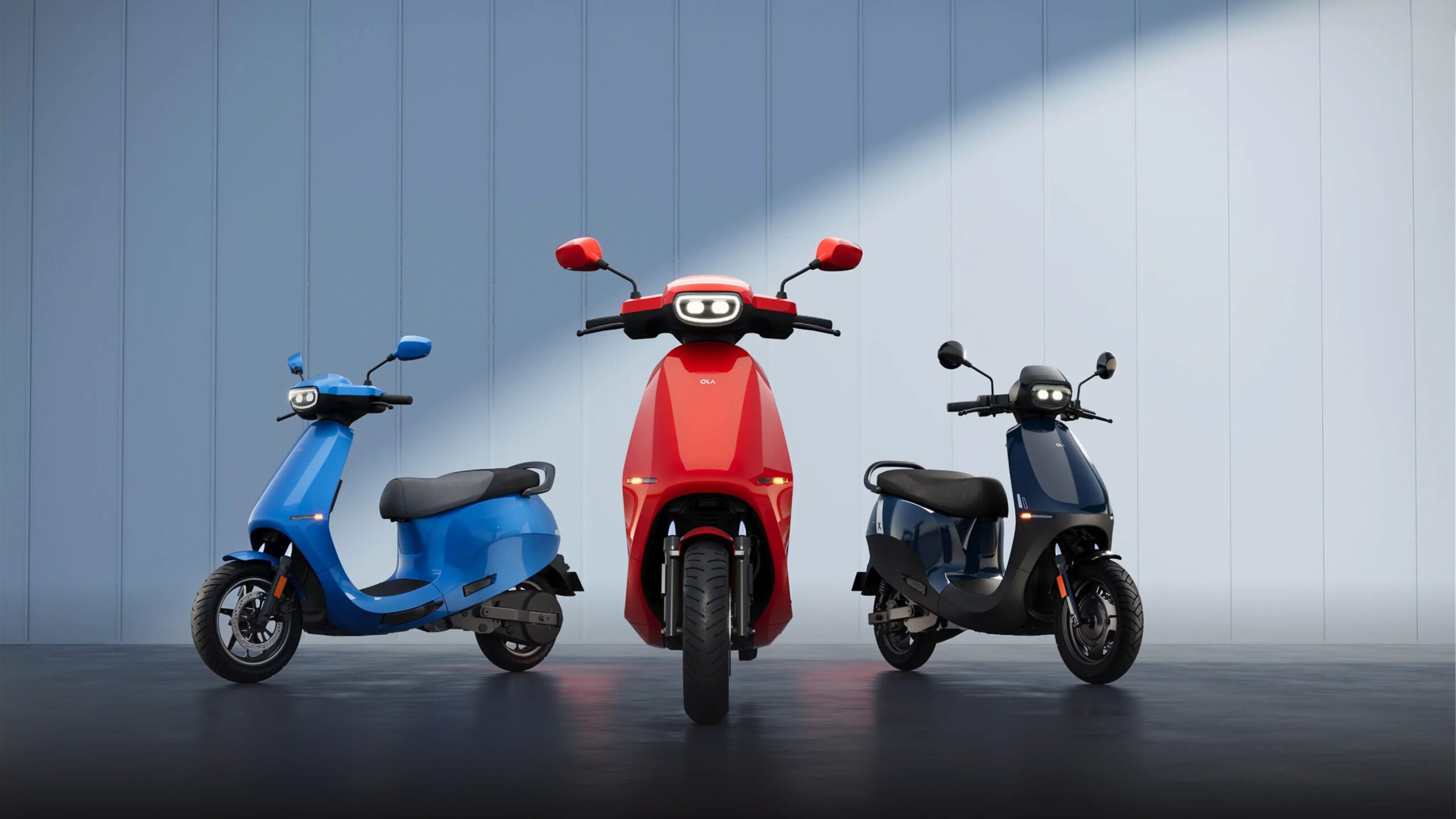
The two component suppliers have once again taken Ola Electric Technologies, the company’s operating unit in the listed electric two-wheeler maker, to the National Company Law Tribunal (NCLT), as they allege that the company has withheld payments for their supplies. Ola Electric is once again in trouble with the law, after two component suppliers filed a petition against the company’s operating unit, Ola Electric Technologies, before the National Company Law Tribunal (NCLT), claiming that the company has been holding back payments for supplies. The suppliers are now demanding bankruptcy proceedings for unpaid dues amounting to over ₹40 crore.
The ₹40.6 Crore Supplier Fight
Recently, Sterling E-Mobility Solutions and Anevolve Mando eMobility have filed petitions. Sterling E-Mobility is part of the electric vehicles business of Sterling Tools, and Anevolve Mando is part of the e-mobility business under Anand Group.
Total reported dues are at ₹40.6 crore, comprising ₹29.8 crore for Sterling E-Mobility and ₹10.8 crore for Anevolve Mando. When the company’s FY26 revenue from operations was at ₹265 crore, that’s a significant figure; however, it’s not a large number when compared to Ola Electric’s revenue of ₹2,253 crore for FY26. The amount of disputed supplier payments in that quarter alone represents more than 15 per cent of revenue.
Both the petitions have been filed under Section 9 of the Insolvency and Bankruptcy Code. The route is available to operational creditors, typically vendors, suppliers or service providers who have unpaid dues for goods or services supplied. Admission of insolvency is NOT the same as a Section 9 petition. It is the tribunal’s duty to resolve whether debt and default have been found and whether there is a legitimate pre-existing dispute.
That distinction is important here because Ola Electric is challenging both points. The company reportedly has raised issues about the quality of some of the components received from vendors. If a pre-existing dispute is credible, it becomes an important defense in case of a petition for the winding up of a company filed by the operational creditors.
The Significance of These Vendors is Great
These are not the fringe suppliers. Sterling E-Mobility makes EV components such as motor control units, DC-DC converters, and related power-electronics systems. Anevolve Mando makes traction motors and controllers for 2- and 3-wheel electric vehicles. These components are near the heart of the electric vehicle powertrain and electrical system design.
In April 2026, the Bengaluru bench of the NLC in April 2026 first heard the matter of Anevolve. At that time, the legal changes referred to the claim as an operating debt of ₹9.84 crore related to the provision of motors. The current estimate is ₹ 10.8 crore. A hearing was again held in June and is scheduled for July 27. Sterling’s case was also filed in April, before the same bench.
Legal containment is the immediate problem for Ola Electric. The bigger problem is the confidence of the vendors. The confidence of suppliers is a key element for a fast-growing EV manufacturer when it comes to dealing with service backlog, parts availability, and production planning simultaneously.
Rosmerta Was The Earlier Warning Sign
The company has seen a rise in cases where it has been hit with an insolvency petition due to unpaid vendor dues, a situation it has now found itself in. NCLT filed a lawsuit in March 2025 to recover unpaid damages for claims related to vehicle registration services and high-security registration plates.
Rosmerta Digital Services has claimed dues of just over ₹22 crore and Rosmerta Safety Systems has claimed nearly ₹2.5 crore. Ola Electric at first refused to accept this, but later the case was settled out of court. The company incurred an outlay of ₹26.75 crore on the Rosmerta Group and the petitions were withdrawn.
That controversy had a more visible operational impact as it was connected with the discrepancy between the number of sales reported by Ola Electric and the number of vehicles registered on the government’s VAHAN portal. Ola later revealed that the registration mismatch was related to registration vendors’ negotiations and that the backlog was resolved.
The new cases are distinct in that they are cases involving component suppliers instead of registration-service vendors. So far, there is no confirmed disruption in production. However, a history of repeated vendor-led insolvency petitions sets a bad precedent for a company that is seeking to assuage investors, customers and suppliers that its operating reset is effective.
The Financial Background is Slower Than Last Year
The situation in that regard is more delicate. FY26 proved to be a tough year for Ola Electric. In FY25, its consolidated revenue from operations was at ₹2,253 crore as compared with ₹4,514 crore in FY24. Deliveries are expected to be at 1,73,794 units for FY26, with just 20,256 units delivered in Q4 FY26. The company’s loss, which was still very lossy, cut down to ₹1,833 crore from ₹2,276 crore a year ago.
The size of the payables pressure at the group level is also apparent from the audited balance sheet. Ola Electric had a total trade payables of approximately ₹679 crore as of March 31, 2026, which includes ₹116 crore due to micro and small enterprises and ₹563 crore due to other creditors. This was less than the previous year’s ₹951 crore, and reflects that supplier payments are still a significant working-capital item.
The FY26 statistics didn’t have everything bad. Ola Electric reported its first-ever positive operating cash flow for Q4 FY26 with consolidated OCF of ₹91 crore. Gross margin was higher at 38.5 percent in Q4 FY26, and 30.6 percent for the year. The lease rentals expense declined significantly from ₹844 crore in Q4 FY25 to ₹428 crore in Q4 FY26.
But it’s vendor clashes that are putting those enhancements to the test. If the cost of control reduces supplier relationships or parts availability, it is not useful.
Service Fixes Continue to be Under Scrutiny
Ola Electric is also working to rebuild customer confidence in its service following months of complaints of non-performance and parts shortages. Average service turnaround time dropped from about nine days in October of 2025 to nearly one day in March of 2026, the company has said. It has also stated that parts pendency dropped by 69 percent from October to April, service backlog went down from 14 days to six days, and service closures improved to almost 87 percent.
Bhavish Aggarwal has admitted that the company had one of its main challenges as providing spare parts. Since then, Ola has restructured its inventory and procurement processes, such as carrying larger parts inventories directly in the service centres and enhancing forecasting.
This is why the most recent supplier cases are important, other than the legalities involved. If the conflict is restricted to claims for payment and quality, it might be solved commercially. It could cause new stress on service centres and production planning at the same time the company is attempting to regain momentum, if it threatens supply continuity or vendors’ confidence.
What Happens Next
Conflict is likely or another negotiation. In the case of Rosmerta, Ola Electric has demonstrated that it is ready to settle with vendors when the financial burden of extended litigation is too significant.
The petitions at this time are allegations and not a confession of insolvency. However, they contribute to a bigger inquiry regarding the discipline of Ola Electric. The company is attempting to turn in volumes, margins, contain cash outflows, and stabilise services. New NCLT cases from components suppliers make that recovery less easy to peddle as a clean turnaround deal.